










By Judy Maina
NAIROBI — East African policymakers and analysts are increasingly divided over the future of the U.S.-backed African Growth and Opportunity Act (AGOA), as the decades-old trade arrangement approaches its latest expiry deadline at the end of this year.
The debate intensified this week after remarks by Kenyan scholar Patrick Loch Otieno Lumumba, who described AGOA as a form of “economic neo-colonialism” that limits Africa’s industrial ambitions.
AGOA, introduced in 2000, grants eligible African countries duty-free access to U.S. markets for thousands of products. However, critics say the scheme’s unilateral nature, allowing Washington to revoke eligibility, creates uncertainty and undermines long-term investment.
“We are told this is an act of growth and opportunity, yet the opportunities are conditional,” Lumumba said at a regional symposium Tuesday.
“When countries assert independent policies, access can be withdrawn.”
Several countries, including Ethiopia, have in recent years lost eligibility over governance and human rights concerns, highlighting what some analysts describe as political risk embedded in the framework.
Limited gains, persistent barriers
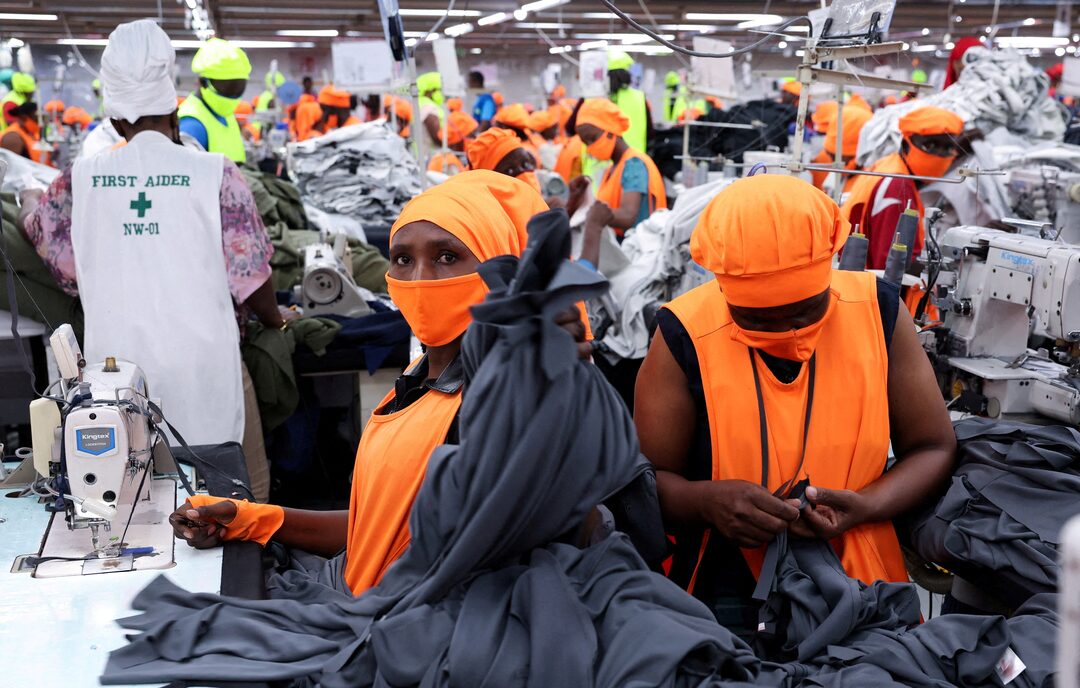
Despite more than two decades of preferential access, non-oil exports from sub-Saharan Africa to the United States remain concentrated in a handful of countries and sectors, including apparel and agriculture.
Economists say structural challenges — such as strict rules of origin and compliance standards, have limited broader participation, particularly for small and medium-sized enterprises.
“AGOA created pockets of success, but it has not fundamentally transformed industrial capacity,” said a Nairobi-based trade analyst.
Shift toward continental trade
Frustration with the program’s short-term extensions has accelerated interest in intra-African trade initiatives, particularly the African Continental Free Trade Area, which aims to create a single market across the continent.
In East Africa, governments are prioritizing regional value chains and manufacturing, seeking to reduce dependence on external markets.
“Intra-African trade remains low compared to other regions, but the direction of policy is shifting,” said another regional economist.
“There is growing emphasis on building supply chains within Africa.”
Uncertain outlook
The U.S. Congress has extended AGOA through Dec. 31, 2026, but officials and businesses say the short timeframe offers little certainty for investors considering large-scale industrial projects.
Some policymakers argue that a longer-term, rules-based agreement would provide greater stability, while others see the approaching deadline as an opportunity to accelerate economic integration within Africa.
As the deadline nears, governments in Nairobi and across the region face a strategic choice: continue reliance on preferential access to Western markets or invest more heavily in building a self-sustaining continental trade system.
“The question is no longer just about access to the U.S.,” said one regional policy adviser. “It is about defining Africa’s position in the global economy.”
© All East Africa, all rights reserved