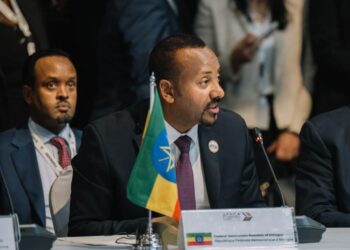











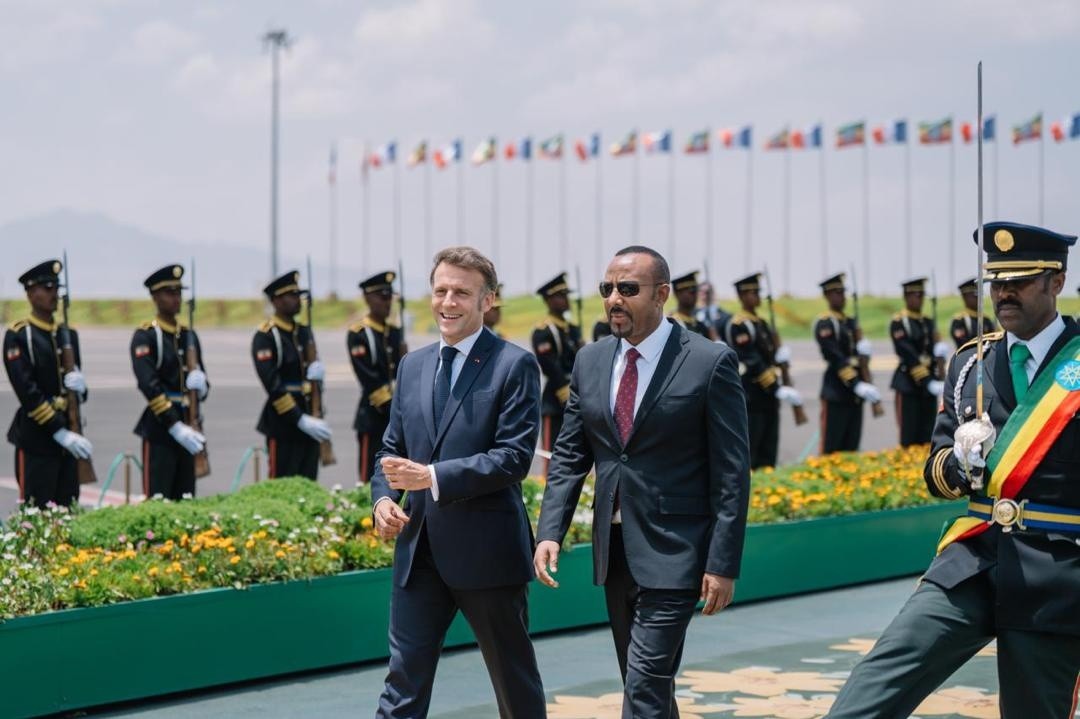
ADDIS ABABA (AEA) – Ethiopia’s reintegration into the global diplomatic and security fold accelerated on Wednesday as the United States formally ended a five-year arms embargo, coinciding with a high-stakes state visit by French President Emmanuel Macron.
The U.S. State Department’s Directorate of Defense Trade Controls (DDTC) published a notice removing Ethiopia from the list of countries subject to a “policy of denial” for defense exports.
The move marks the most significant shift in Washington’s policy toward Addis Ababa since the 2022 Pretoria Peace Agreement ended the brutal civil war in Tigray.
While the lifting of the embargo is a victory for Prime Minister Abiy Ahmed, it was paired with a clear diplomatic message from Europe.
President Macron, arriving in Addis Ababa for his third state visit, moved to deepen French economic ties, signing a 54.6 million Euro loan for the “Ethiopia Digital and Renewable Energy Program.”
“Ethiopia is the anchor of the Horn,” Macron said during a joint press conference at the National Palace.
“Our partnership is based on the conviction that a stable, integrated, and modern Ethiopia is essential for both African and European security.”
The lifting of U.S. sanctions is particularly timely. Ethiopia is currently navigating a complex domestic security landscape, with ongoing insurgencies in the Amhara and Oromia regions.
By restoring access to U.S. defense technology, the Abiy administration gains critical leverage, though Washington emphasized that future sales would be subject to strict human rights vetting.
For Abiy Ahmed, the dual embrace by Washington and Paris serves as a validation of his “homegrown economic reform” agenda.
The Prime Minister has spent the last year attempting to pivot from a state-led developmental model to a more liberalized economy, including the opening of the telecommunications and banking sectors to foreign investors.
The French delegation included executives from Orange and Engie, reflecting France’s desire to participate in the privatization of Ethiopia’s state-owned giants.
The energy agreement signed on Wednesday focuses specifically on the “last mile” electrification of rural areas, utilizing French solar technology to bridge the gap in regions currently underserved by the national grid.
However, the diplomatic thaw is viewed with skepticism by some human rights groups. Activists argue that the West is prioritizing regional stability and the containment of Chinese and Russian influence over accountability for wartime atrocities.
As Ethiopia prepares to host the next African Union summit, the atmosphere in Addis Ababa is one of cautious optimism. The return of Western defense and development capital suggests that the “pariah status” of the war years has finally been shed, but the true test will be whether this new support can translate into a lasting domestic peace.