










KAMPALA, — Yoweri Museveni, the 81-year-old leader who has governed Uganda for four decades, was sworn in for his seventh consecutive term on Tuesday, promising “no more excuses” for poverty while his son, General Muhoozi Kainerugaba, loomed large over the military-heavy proceedings.
The inauguration at the Kololo ceremonial grounds was a display of both continuity and the changing face of Ugandan power.
As Russian-made Sukhoi fighter jets screamed over the capital, the contrast between the aging revolutionary leader and the modernizing military apparatus he commands was stark.
The Oath and the Promise
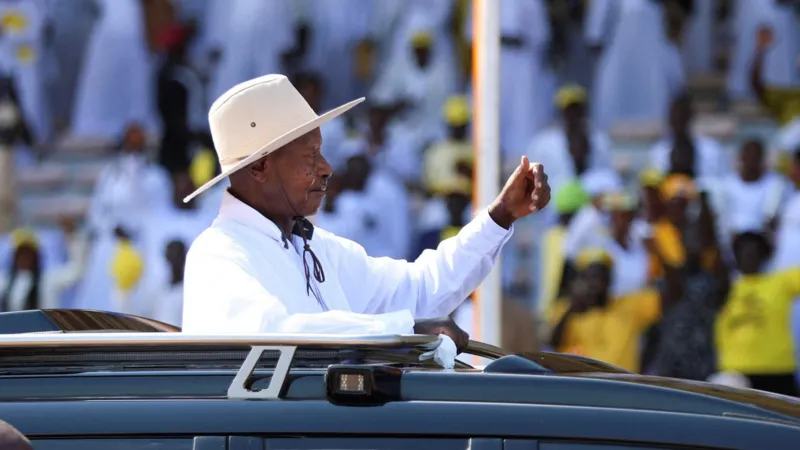
Clad in his signature wide-brimmed hat, Museveni took the oath of office before thousands of supporters and several regional heads of state. His inaugural address focused heavily on “wealth creation” at the household level, a recurring theme in his recent years of governance.
“The time for excuses is over,” Museveni declared, urging Ugandans to embrace commercial agriculture and entrepreneurship. “We have built the infrastructure; we have the peace. Now, every Ugandan must join the money economy.”
Despite the optimistic rhetoric, the president inherits a nation with a median age of just 16, where many young people feel disconnected from the “Bush War” narrative that brought Museveni to power in 1986.
The “Muhoozi Factor”
Perhaps more significant than the oath itself was the role of the President’s son, General Muhoozi Kainerugaba. As the head of the Ugandan military,
Muhoozi was the architect of the days-long rehearsals and the massive security operation that locked down Kampala.
Political analysts noted that Muhoozi’s presence was not merely operational but symbolic.
While Museveni has not officially named a successor, the “Muhoozi Kainerugaba (MK) Movement” has become increasingly vocal, presenting the General as the bridge between the old guard and the “digital generation.”
Economic and Diplomatic Headwinds
The seventh term begins under a shadow of economic pressure. While the official ceremony was lavish, Uganda faces rising debt levels and international scrutiny over its human rights record and anti-LGBTQ+ legislation.
Foreign diplomats present at the event remained largely silent, though some Western missions have expressed concern over the “narrowing of political space.”
Opposition figures, many of whom were under heavy surveillance or “preventative arrest” during the ceremony, dismissed the inauguration as a “formality of an entrenched autocracy.”
As Museveni begins another five years, the central question for Uganda remains whether he can manage an orderly transition that satisfies both his loyal military and a restless, youthful population.