










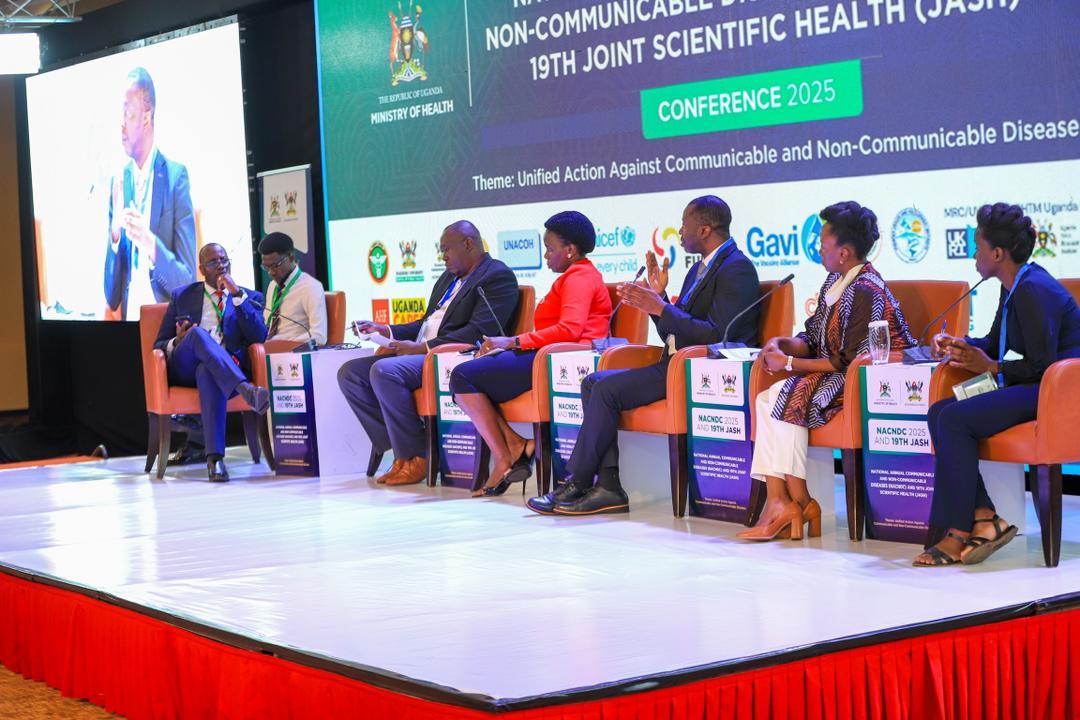
KAMPALA — The United States and Uganda inaugurated a joint steering committee on Saturday to oversee a landmark $2.3 billion health investment, signaling a deepening of bilateral ties centered on long-term medical self-reliance and pandemic preparedness.
The Joint Health Steering Committee (JHSC), co-chaired by U.S. Ambassador William W. Popp and Ugandan Minister of Health Dr. Jane Ruth Aceng Ocero, met for the first time in Kampala.
The committee is tasked with managing a five-year Memorandum of Understanding that sees the U.S. contributing $1.7 billion and Uganda providing $577 million in co-investment.
“This committee underscores the strategic importance of this partnership,” Ambassador Popp told AEA following the meeting. “It advances a strategy of addressing disease threats at their source while building sustainable local systems that can eventually graduate to self-sufficiency.”
The first year of the plan allocates $410 million in U.S. assistance, focusing on the “big four” infectious diseases: HIV/AIDS, malaria, tuberculosis, and polio. However, a significant portion of the new funding is earmarked for “workforce capacity,” an effort to reduce Uganda’s historical dependence on foreign medical expertise.
Minister Aceng emphasized that the agreement is a shift away from traditional “donor-recipient” dynamics. “This represents Uganda’s determination to build a resilient health system that serves all citizens, funded through a transparent, mutual commitment,” she said.
The partnership comes at a delicate time for Ugandan diplomacy, as the country navigates regional security challenges and internal political debates. Analysts suggest that the health agreement serves as a “soft power” anchor for U.S.-Uganda relations, ensuring cooperation on humanitarian grounds even when political friction arises.
Beyond health, the Ugandan capital remains focused on infrastructure. Sources close to the Ministry of Works confirmed to AEA that discussions are accelerating regarding the synchronization of the Standard Gauge Railway (SGR) with regional neighbors, though funding gaps remain a primary hurdle.
As the JHSC begins its work, the success of this health initiative is being watched as a potential blueprint for other U.S. bilateral investments across the continent.