









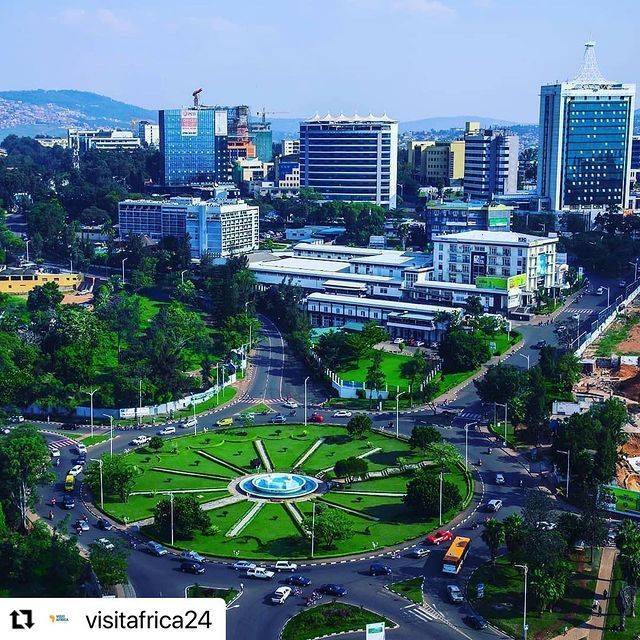
KIGALI (AEA) — The African Development Bank (AfDB) and the Asian Infrastructure Investment Bank (AIIB) launched a $300 million Results-Based Financing (RBF II) program in partnership with the Government of Rwanda on Friday. The initiative is aimed at achieving universal access to clean, affordable electricity across the country.
The agreement, formalized in Kigali, will be financed through a $200 million loan from the AfDB and a $100 million co-financing facility from the Beijing-headquartered AIIB.
The initiative represents a significant expansion of Rwanda’s energy grid infrastructure, reinforcing the country’s reputation as a reliable destination for multilateral development capital.
The RBF II program will be implemented by Rwanda’s Ministry of Infrastructure via the state-owned Rwanda Energy Group (REG) and its subsidiaries, the Energy Development Corporation Limited (EDCL) and the Energy Utility Corporation.
The program builds on a successful first phase that deployed off-grid solar solutions to over 370,000 households and integrated an additional 460,000 people into the national grid.
“Our collaboration with the AfDB and the AIIB is a critical step toward realizing our strategic vision of 100% universal energy access,” said Rwanda’s Minister of Infrastructure, Jimmy Gasore.
“By targeting both grid expansion and off-grid solar tech for remote rural communities, this $300 million injection ensures that economic transformation is inclusive and sustainable.”
Rwanda’s aggressive focus on infrastructure development coincides with escalating diplomatic maneuvering within the broader Central and East African regions.
On Friday, diplomatic tensions between Kigali and the Democratic Republic of Congo (DRC) resurfaced at the global level, as both nations advanced rival campaigns for the leadership of the International Organization of La Francophonie (OIF).
The DRC has formally nominated Juliana Lumumba, the daughter of independence icon Patrice Lumumba, to lead the powerful French-speaking bloc.
Kinshasa argues that the leadership should reflect the demographic weight of the DRC, which is now the world’s largest French-speaking nation. Conversely, Rwanda is lobbying for the re-election of the incumbent Secretary-General, Louise Mushikiwabo, for a third term, pointing to her institutional modernization reforms over the past several years.
The diplomatic contest over the OIF leadership serves as a proxy for deep-seated security tensions between the two neighbors. Kinshasa continues to accuse Kigali of providing military and logistical support to the M23 rebel movement operating in the eastern DRC—an allegation that Rwanda consistently denies, countering that the DRC collaborates with the FDLR militia, a group containing elements linked to the 1994 Rwandan genocide.
Despite the persistent regional geopolitical noise, international financial institutions continue to look favorably on Rwanda’s domestic economic governance. The clean execution of phase one of the energy program provided the structural confidence required for the AIIB and AfDB to authorize the second phase.
As REG begins deploying the new funds, economic analysts expect Rwanda’s increased power generation to boost manufacturing, agricultural processing, and cross-border digital trade within the East African Community.