










KAMPALA (AEA) — Ugandan health authorities confirmed on Friday that a Congolese national who died in the capital city of Kampala tested positive for Ebola virus disease, prompting an immediate public health mobilization to prevent a wider outbreak.
The individual, a male trader from the neighboring Democratic Republic of Congo (DRC), reportedly fell ill before crossing the porous western border into Uganda. He sought medical treatment under a pseudonym at a local clinic
in Kampala, where he succumbed to the illness earlier in the week. Health authorities conducted posthumous diagnostic testing, and the results returned positive for Ebola, sending shockwaves through the regional epidemiological network.
The confirmation has put the Africa Centres for Disease Control and Prevention (Africa CDC) and the World Health Organization (WHO) on high alert. The case is directly linked to a newly detected outbreak in the DRC’s eastern Ituri province, which has already claimed at least 65 lives among 246 suspected infections.
Critically, preliminary viral sequencing from the Ituri outbreak indicates the presence of a non-Zaire strain of the Ebola virus. This has raised deep concerns among international medical personnel because the highly effective vaccines and therapeutic treatments deployed in previous East African outbreaks—such as Ervebo—were engineered specifically to target the Zaire variant.
“The introduction of an unmapped or non-Zaire strain into a dense urban environment like Kampala requires an immediate, flawless contact-tracing apparatus,” said Dr. Agnes Namaganda, an epidemiologist specializing in viral hemorrhagic fevers in Kampala.
“Our immediate priority is identifying every individual who interacted with the deceased from the moment he crossed the border, through his transit to Kampala, and during his medical consultations.”
Ugandan Minister of Health Jane Ruth Aceng appealed for calm during a press briefing, reassuring the public that the country’s healthcare architecture remains resilient following its successful containment of the Sudan ebolavirus strain in early 2023. E
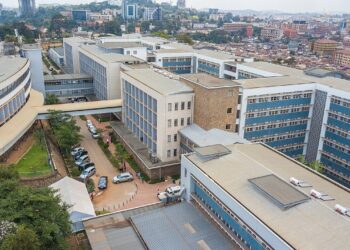
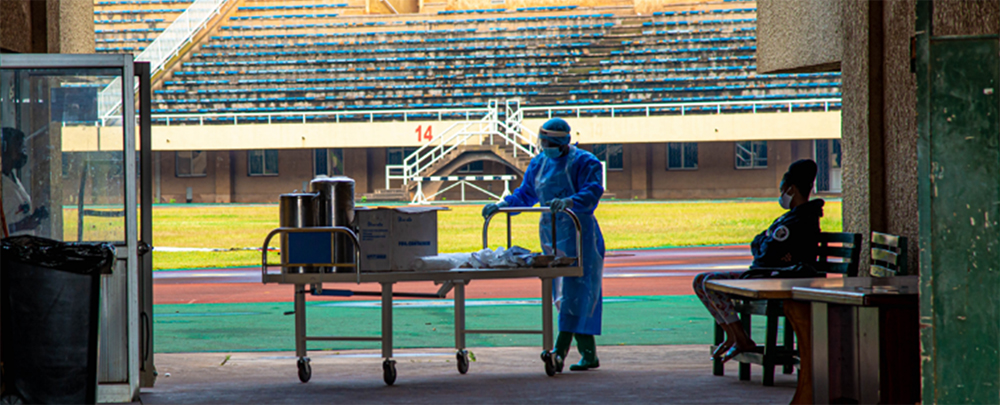
mergency response teams have been dispatched to the western district border entries, and isolation wards are being re-established at Mulago National Referral Hospital.
The geographical reality complicates containment efforts. The eastern DRC, particularly Ituri and North Kivu provinces, remains plagued by protracted armed conflict involving the M23 rebel coalition and various local militias. This systemic instability has displaced hundreds of thousands of civilians, forcing regular, unmonitored human migration across the border into Uganda and South Sudan.
“The nexus of conflict and infectious disease in the Great Lakes region represents a worst-case scenario for border control,” noted an international aid coordinator working on the Uganda-DRC border.
“When people are fleeing violence, they do not queue at official border checkpoints where health screenings take place. They cross through forests and rivers, inadvertently carrying pathogens with them.”
The WHO has dispatched specialized laboratory components to Kampala to assist Ugandan scientists in conducting rapid genetic sequencing to isolate the specific characteristics of the virus. In tandem, community leaders in Kampala’s informal settlements, where the deceased spent his final days, are being mobilized to report any individuals exhibiting symptoms such as high fever, severe headache, muscle pain, and unexplained bleeding.
Historically, Uganda has demonstrated high technical competency in managing hemorrhagic outbreaks, but an urban introduction tests the limits of city-wide surveillance.
Neighbors including South Sudan and Rwanda have immediately escalated their border surveillance postures. With regional trade corridors highly reliant on truck freight moving from Mombasa and Dar es Salaam through Kampala to the DRC, an extended quarantine or border disruption could have severe economic ramifications across East Africa.