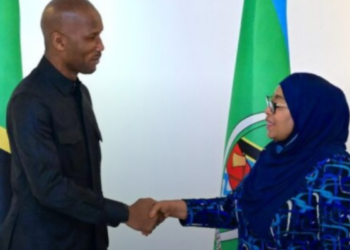












DAR ES SALAAM— Tanzania has reached a staff-level agreement with the International Monetary Fund (IMF) that will unlock approximately $375.5 million, providing a critical boost to President Samia Suluhu Hassan’s ambitious economic reform agenda.
The announcement on Tuesday follows a two-week mission by an IMF team led by Nicolas Blancher, which concluded that Tanzania’s performance under the Extended Credit Facility (ECF) and the Resilience and Sustainability Facility (RSF) remains “strong despite global shocks.”
Fiscal Discipline Meets Social Growth
The agreement, which still requires the approval of the IMF Executive Board, brings the total support to Tanzania to nearly $800 million. The funds are earmarked for:
Macroeconomic Stability: Strengthening foreign exchange reserves, which have been pressured by global commodity prices.
Climate Resilience: Funding for green energy and sustainable agriculture under the RSF.
Social Spending: Protecting budgets for education and healthcare amidst fiscal consolidation.
“The Tanzanian authorities have shown remarkable commitment to maintaining fiscal discipline while expanding the social safety net,” Blancher said in a statement.
He noted that the country’s growth is projected to accelerate as infrastructure projects, like the Standard Gauge Railway (SGR), begin to yield economic dividends.
The “Samia Effect”
Since taking office in 2021, President Samia has aggressively pursued a “4R” philosophy: Reconciliation, Resilience, Reforms, and Rebuilding. This IMF deal is seen as a formal endorsement of her shift away from the more isolationist policies of her predecessor.
In Dar es Salaam, the news was welcomed by the business community. “This is a signal to international investors that Tanzania is a stable, predictable market,” said a senior executive at a local commercial bank.
“The access to the RSF particularly shows we are thinking ahead about the climate risks that threaten our agricultural base.”
Challenges Remain
Despite the IMF’s praise, the report highlighted “persistent structural bottlenecks.” Corruption remains a concern, and the IMF urged the government to continue improving the business environment to attract more private sector investment.
Additionally, with elections approaching in late 2025/early 2026, the government faces the challenge of maintaining fiscal austerity while meeting the populist demands of the electorate. The IMF emphasized that “continued transparency in public accounts” will be vital to maintaining the current momentum.