










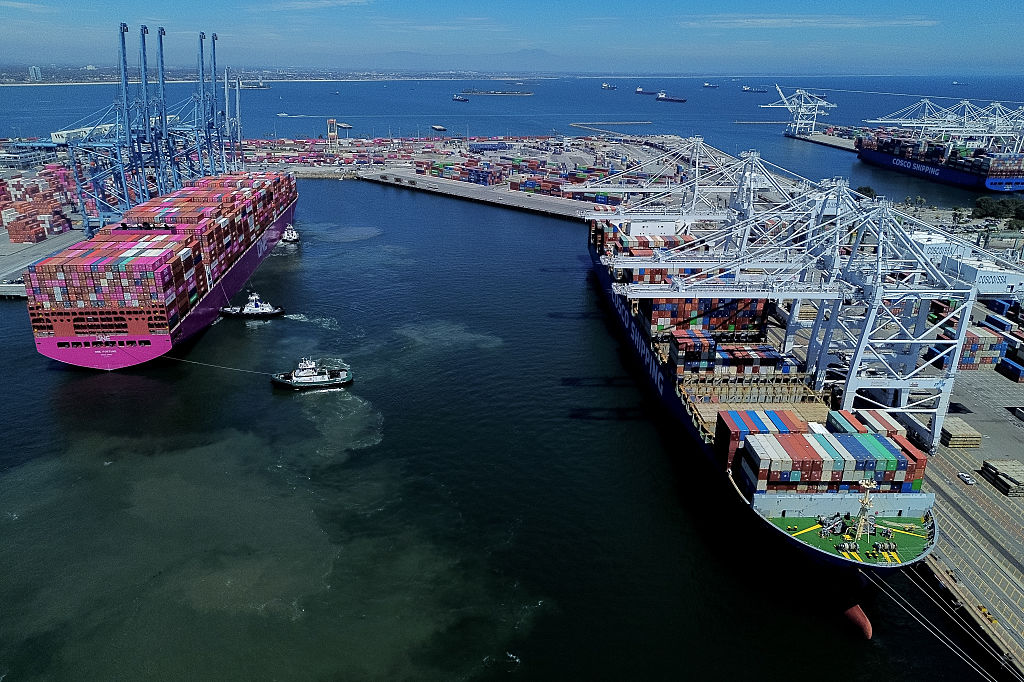
DAR ES SALAAM (AEA) – Tanzania has launched an aggressive $7 billion expansion of its maritime and rail infrastructure, aimed at transforming Dar es Salaam into the primary logistics gateway for the African interior and challenging the long-standing dominance of Kenya’s Mombasa port.
Transport Minister Makame Mbarawa, speaking before the National Assembly in Dodoma on Wednesday, outlined a budget that prioritizes the “blue economy” and cross-border connectivity.
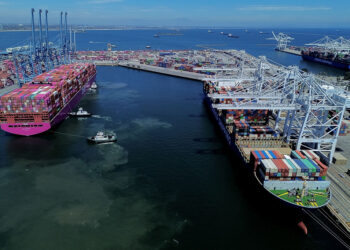
The Tanzania Ports Authority (TPA) has officially broken ground on two new deep-water berths at the Malindi terminal, part of a master plan to increase Dar es Salaam’s capacity from 12 to 22 berths.
“We are building for a future where Dar es Salaam is the heartbeat of trade for the Great Lakes region,” Mbarawa said. “Our neighbors—Zambia, Malawi, Rwanda, and the DRC—require a reliable, high-capacity exit to the sea. Tanzania is now that partner.”
Central to this logistical offensive is the Standard Gauge Railway (SGR). Government officials confirmed that the electrified line will begin commercial freight operations between the coast and the new Morogoro Inland Container Terminal by next month.
The Morogoro facility is designed to act as a “dry port,” capable of processing 600 containers daily, significantly reducing the turnaround time for cargo that currently relies on congested road networks.
The infrastructure blitz is not merely about physical capacity; it is a calculated geopolitical move. For decades, the “Northern Corridor” through Kenya was the default route for East African trade. However, under President Samia Suluhu Hassan, Tanzania has marketed itself as a more stable and cost-efficient alternative.
Economists point out that the completion of the SGR link to the Burundi border, currently under construction with Chinese and Turkish partnership, will provide the shortest path for minerals from the eastern DRC to reach global markets.
This has prompted a “logistics arms race” in the region, with Kenya scrambling to upgrade its own facilities to prevent a loss of market share.
The expansion also targets the Southern Highlands. New investments in the Mtwara port are intended to support the burgeoning coal and graphite export industries, which have seen a spike in demand due to the global shift toward electric vehicle battery production.
However, challenges remain. Critics in the Tanzanian parliament raised concerns about the country’s mounting external debt, much of which is tied to these massive infrastructure projects.
Furthermore, while the physical hardware—the rails and the berths—is being built, private sector players argue that bureaucratic “software” (customs delays and non-tariff barriers) still needs streamlining.
Despite these hurdles, the sheer scale of the Dar es Salaam expansion marks a new era. With the world’s eyes on Africa’s critical minerals, Tanzania is betting that by controlling the “pipe,” it can dictate the flow of the continent’s future wealth.