










NAIROBI (AEA) — Kenya’s energy regulator announced a steep hike in domestic fuel prices on Friday, triggering widespread criticism from manufacturing groups and stoking fears of a renewed inflationary spiral in East Africa’s largest economic hub.
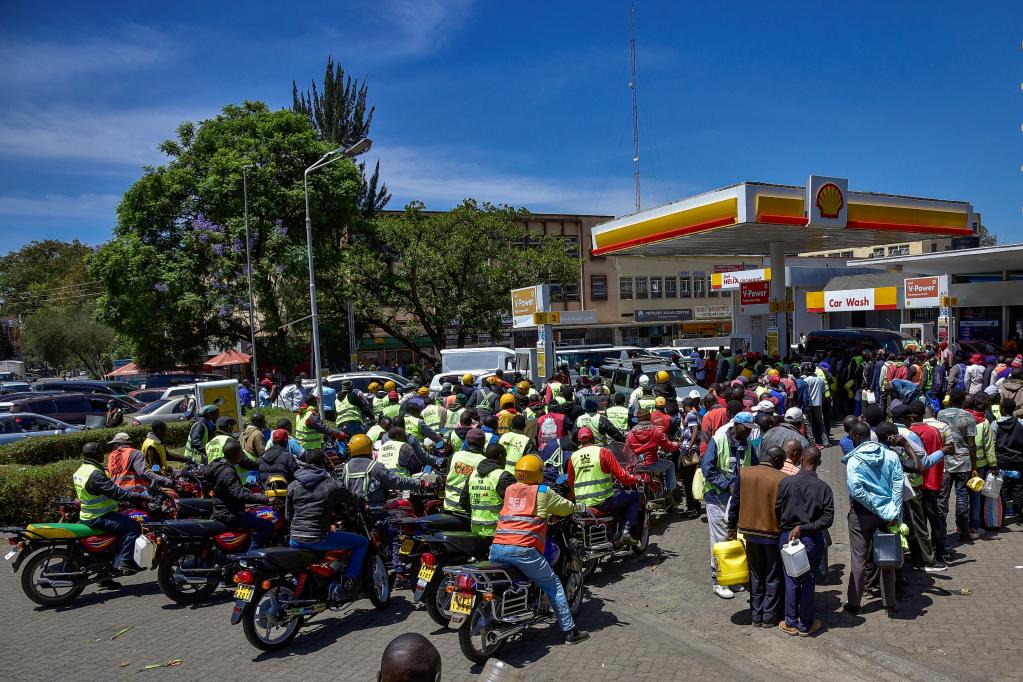
The Energy and Petroleum Regulatory Authority (EPRA) announced that for the mid-May to mid-June pricing cycle, the retail cost of Super Petrol in Nairobi will increase by 16.65 Kenyan shillings to 214.25 shillings ($1.62) per liter.
More critically for industrial and transport sectors, the price of automotive diesel surged by 46.29 shillings to 242.92 shillings ($1.84) per liter. The price of household kerosene, primarily used by low-income urban and rural families for cooking and lighting, remained unchanged at 152.78 shillings per liter.
The sharp diesel price adjustment reflects a volatile international crude oil market, compounding pressures on the local currency. Over the past year, the Central Bank of Kenya has attempted to stabilize the shilling against the U.S. dollar, but persistent debt servicing demands and reduced dollar inflows have continuously constrained monetary interventions.
The unexpected magnitude of the diesel price increase drew immediate fire from private sector lobbies. The Kenya National Chamber of Commerce and Industry (KNCCI) issued a stern warning hours after the announcement, stating that the pricing cycle would deal a heavy blow to commercial competitiveness.
“The sharp rise in diesel is particularly concerning because diesel serves as the backbone of our operational industries, primary manufacturing, and transport networks,” the KNCCI statement read.
“A spike of this nature ripples across the entire supply chain, driving up the cost of manufacturing everyday goods and making agricultural transportation prohibitively expensive for smallholder farmers.”
The economic fallout comes at a sensitive political juncture for President William Ruto’s administration. Having spent much of the past two years navigating public dissatisfaction over aggressive fiscal consolidation measures, including new taxes on housing and digital transactions, the administration faces the prospect of resurgent living costs.
Economists warn that higher logistics and energy tariffs will likely reverse recent downward trends in national headline inflation, which had stabilized within the central bank’s target range of 2.5% to 7.5%.
Independent financial analysts in Nairobi pointed out that manufacturing plants, which rely on diesel generators to supplement grid electricity during regular power outages, will have no choice but to pass the added overhead directly to consumers.
“This is a supply-side shock that will immediately manifest in food and commodity logistics,” said Jomo Nyongesa, a senior macroeconomist at an independent financial advisory firm in Nairobi.
“When the price of transporting grain from the agricultural heartland of the Rift Valley to processing plants in Nairobi jumps by 20%, bread and maize meal prices follow inevitably. This undercuts public purchasing power.”
The energy shock coincides with regional discussions surrounding infrastructural resilience. Concurrently, regional institutions are attempting to pivot toward tech-driven data systems to manage public health and resource planning.
At the University of Nairobi, regional academics concluded the APHREA-DST data workshop, emphasizing the integration of data science in managing regional logistics and public health tracking. However, policymakers acknowledge that digital transformation cannot immediately offset structural price pressures in hard infrastructure like petroleum products.
Global oil pricing mechanics suggest that unless regional states establish substantial buffer funds, landlocked and coastal East African states remain exposed to external energy market vulnerabilities. Kenya’s energy regulatory board defended its calculations, noting that the removal of select state-sponsored subsidies over the past fiscal year left retail pricing closely tethered to landed cargo costs.
For ordinary Kenyans, the mathematical shift translates to immediate hardship. Matatu (public minibus) operators in the capital have already threatened nationwide fare adjustments to preserve margins.
As commuter expenses rise alongside industrial overheads, the Ruto administration faces a difficult balancing act: preserving fiscal discipline to satisfy international lenders while shielding an increasingly fragile domestic market from runaway operating costs.