










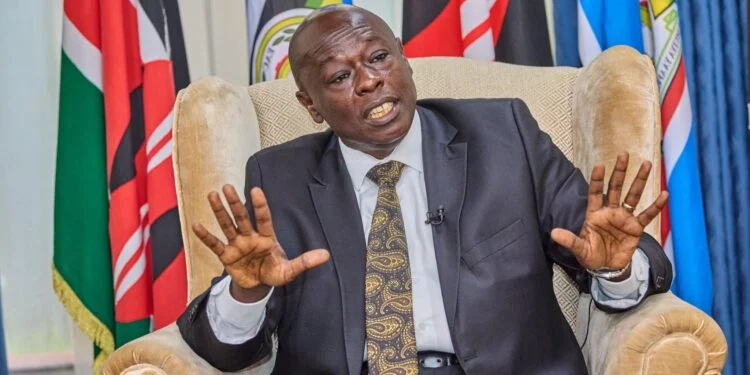
NAIROBI (AEA) – Kenya’s political and economic landscape shifted on Friday as the High Court waded deeper into the unprecedented impeachment of former Deputy President Rigathi Gachagua, while the government simultaneously moved to implement a significant minimum wage increase to stem rising public discontent.
In a courtroom packed with constitutional lawyers and political observers, the High Court allowed medical evidence from Gachagua’s personal physician to be formally admitted.
The ruling is a tactical victory for the former Deputy President’s legal team, which argues that the Senate’s decision to proceed with the impeachment while Gachagua was hospitalized was a violation of his right to a fair hearing.
“The admission of this evidence ensures that the record reflects the physical impossibility of the petitioner’s attendance during the final hours of the Senate trial,” said senior counsel Paul Muite, representing Gachagua.
The National Assembly, however, countered by requesting a fresh, independent medical examination, questioning the severity of the illness that sidelined Gachagua during his removal from office.
While the capital remained transfixed by the judicial drama, Labour Cabinet Secretary Alfred Mutua signed legal notices formalizing a 12% increase in the general minimum wage and a 15% hike for agricultural workers.
The move is seen as an attempt by President William Ruto’s administration to alleviate the “hustler” nation’s frustrations over the high cost of living, which has fueled recent protests.
The economic news was bolstered by an announcement from the Kenya National Highways Authority (KeNHA), which confirmed significant progress on the Ksh 100 billion Isiolo-Mandera Highway.
The 740km artery is expected to be a game-changer for northern Kenya, with specific sections in Wajir County nearing completion ahead of a 2028 target.
However, the day was also marked by a somber warning from Prime Cabinet Secretary Musalia Mudavadi regarding the safety of Kenyans abroad.
Mudavadi revealed that over 751 citizens had been repatriated this year alone from exploitative labor conditions in Russia, Southeast Asia, and the Gulf, highlighting the ongoing risks of human trafficking masked as employment opportunities.